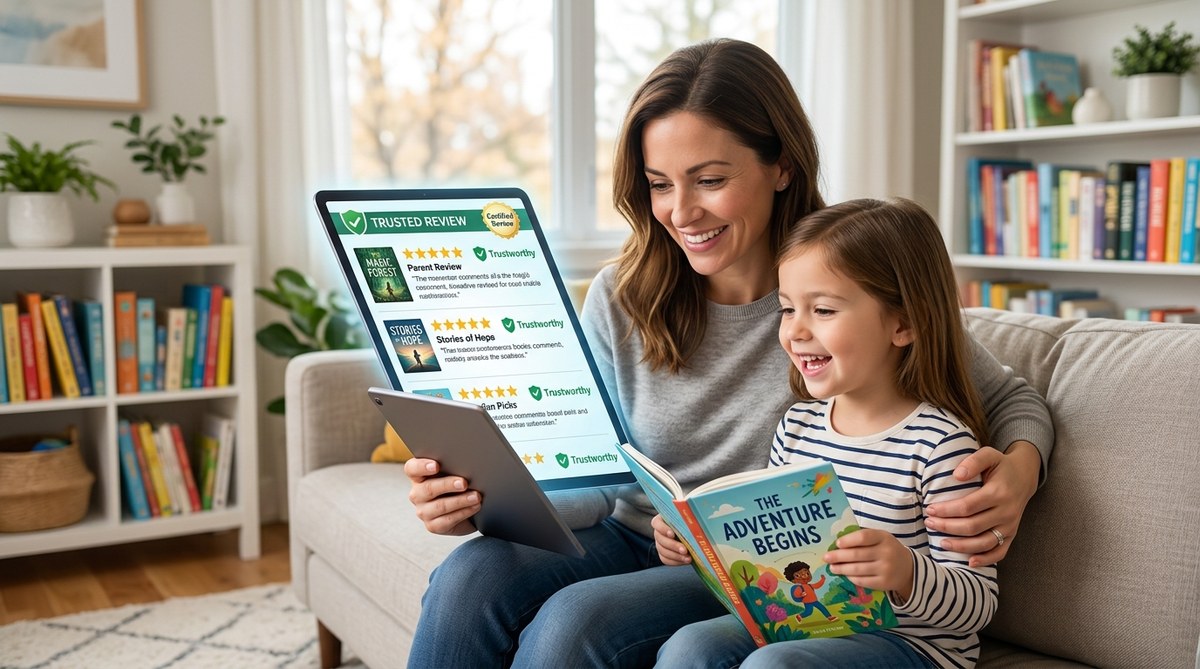
How to Identify Trustworthy Book Reviews for Your Child’s Reading Journey
Picking books for your child should feel exciting, not stressful. But with thousands of reviews online, it is easy to feel overwhelmed. Some reviews are written by parents who genuinely loved the story. Others are placed by publishers hoping to sell copies. And some are just vague, generic blurbs that tell you nothing useful. So how do you tell which ones you can trust? The answer comes down to a few smart strategies that any parent can learn. You do not need a degree in education or literature. You just need to know what to look for and what to ignore.
Not all book reviews are reliable for children’s books. To identify trustworthy reviews, check the reviewer’s background, look for specific details about age appropriateness and content themes, watch for generic praise, and compare multiple sources. Prioritize reviews from educators, librarians, and parent communities. Trustworthy reviews offer balanced pros and cons, mention potential sensitivities, and discuss plot and learning value. This method helps you choose books that truly benefit your child’s reading development and growth.
Why Trust Matters When Choosing Books for Kids
Your child’s reading journey shapes their vocabulary, empathy, and critical thinking. A poorly chosen book can bore them, confuse them, or even introduce themes they are not ready for. That is why the quality of the review you rely on matters so much. A trustworthy review gives you enough detail to decide if a book matches your child’s age, interests, and reading level. It also helps you avoid books that might be too scary, too complex, or simply not engaging.
Parents in the United States now spend an average of 20 minutes per day searching for book recommendations online. That is a lot of time spent sifting through opinions. Knowing how to identify trustworthy book reviews for children can cut that time in half and leave you with better picks.
Red Flags That Signal a Questionable Review
Not every glowing review deserves your trust. Some are written by people who never read the book. Others are paid endorsements disguised as honest opinions. Here are the warning signs that should make you pause:
- The review uses overly generic language like “amazing story” or “my child loved it” with no specifics.
- It does not mention the age of the child or the reading level.
- The reviewer gives only praise and no constructive criticism.
- The review is extremely short, often just one sentence.
- It includes no details about the plot, characters, or themes.
- The same review appears on multiple sites in identical wording.
- The reviewer has only posted one review ever, or every review they write is five stars.
When you see these signs, treat the review with caution. It may still be accurate, but you cannot verify its reliability. A good review gives you enough meat to make a confident decision.
A Step-by-Step Process for Vetting Reviews
You can apply a simple framework each time you read a book review for your child. This process works whether you are on a retailer site, a library blog, or a parenting forum.
-
Check the reviewer’s credentials. Is this a teacher, a librarian, a parent with multiple kids, or a professional book reviewer? Their background tells you how much weight to give their opinion. A librarian who specializes in children’s literature holds more authority than an anonymous user.
-
Look for specific details about age and content. A trustworthy review will mention the recommended age range and explain why. It will also note any themes that might require discussion, such as loss, bullying, or family change.
-
See if the reviewer read the book thoroughly. Clues include references to specific characters, chapters, and writing style. If they can describe the tone (humorous, suspenseful, heartfelt), they clearly paid attention.
-
Compare the review with at least two other sources. Cross referencing helps you spot outliers. If three reviews praise the same book but one says it is too advanced for a seven year old, you have useful context.
-
Watch for sponsored or affiliate content. Some review sites disclose paid partnerships. Others do not. Look for disclaimers like “I received a free copy in exchange for my honest review.” That does not mean the review is false, but it does mean the reviewer may feel pressure to be positive.
For a deeper look at what makes a review credible, check out our post on top book reviews every parent should read before choosing their child’s next read. It includes examples of reviews that pass the trust test.
Bias and Sponsored Content: How to Separate Fact from Hype
Even well meaning reviewers can be biased. Maybe they loved the author’s previous work and assume this one is just as good. Or they are part of a reading challenge that encourages positive reviews. The table below lays out common techniques for spotting bias and understanding when a review might be influenced.
| Technique | What to Look For | Reliable vs. Unreliable Example |
|---|---|---|
| Look for balanced pros and cons | A review that mentions both strengths and weaknesses. | Reliable: “The illustrations are gorgeous, but the vocabulary may challenge a typical first grader.” Unreliable: “Everything about this book is perfect!” |
| Check the reviewer’s history | Do they review books from the same publisher often? | Reliable: Reviewer covers multiple genres and publishers. Unreliable: Every review is from one imprint. |
| Notice the language | Phrases like “must read” or “could not put it down” without context. | Reliable: “My seven year old asked for this book every night for a week.” Unreliable: “This is a must have for every child’s library.” |
| Look for disclosure statements | Did the reviewer receive a free copy or payment? | Reliable: “I was given a free copy but my opinions are my own.” Unreliable: No disclosure, but the review is overly enthusiastic. |
A children’s librarian we spoke with sums it up: “When you read a review, ask yourself if the reviewer seems to know what a child that age actually enjoys and understands. If they talk about the plot without explaining if it’s scary or complex, consider that a red flag. Trust the reviewers who can tell you why a book works or does not work for a specific reader.”
For more guidance, read our article on 5 signs a book review is worth your time. It breaks down exactly what to look for in a professional review.
Balancing Professional Reviews and Parent Opinions
Both professional and user reviews have value. Professional reviews from sources like School Library Journal or Kirkus offer trained analysis. They consider literary merit, age appropriateness, and diversity of representation. Parent reviews, on the other hand, give you real world context. They tell you how a book actually sits with a child after dinner on a Tuesday night.
The trick is to use both. Start with professional reviews to build a shortlist of books that pass the quality bar. Then read parent reviews to see if those books work for a child similar to yours. If a professional review says the book is great for ages 8 to 10, but several parents say their 8 year old struggled with the language, you have useful information.
If you want to see how this plays out for different age groups, check out our guide on how to choose the perfect book for every age and interest. It walks you through matching books to developmental stages.
Building Your Own Trustworthy Review Habit
Once you know how to identify trustworthy book reviews for children, the next step is to make it a habit. Keep a short checklist in mind every time you browse for books. Ask yourself: Who wrote this? What specific details did they include? Is there any sign of bias? Does this review come from a source I trust? Over time, you will start to recognize reliable reviews instantly.
You can also contribute to the community by writing your own detailed reviews. Share what age your child is, what they liked, and what you noticed about the book’s content. That helps other parents in the same boat.
Your Child’s Reading Journey Deserves Good Guidance
The effort you put into vetting book reviews pays off in a big way. Your child gets books that challenge them, inspire them, and keep them turning pages. You save time and money. And you build a reading routine that is based on quality, not guesswork.
Start using these strategies today. Pick one new book this week and run it through the steps above. You will be surprised how much confidence you gain. Over time, you will become the go to parent in your circle for book recommendations. And your child will thank you for every story that lights up their imagination.