Must-Read Kids Books That Encourage Critical Thinking and Creativity
Children’s minds are like sponges. They soak up stories, ideas, and lessons from the books they read. Choosing the right books can spark curiosity, develop problem-solving skills, and nurture creativity. With so many options out there, knowing which books foster genuine critical thinking and inventive ideas is essential. This guide will introduce you to some of the most engaging children’s books that challenge young minds while making reading fun.
Selecting children’s books that promote critical thinking and creativity helps build essential skills early. Look for stories that challenge assumptions, encourage questioning, and inspire imaginative problem-solving to foster lifelong learning and curiosity in kids.
Why kids books that encourage critical thinking and creativity matter
Books that promote these skills do more than entertain. They help children develop a mindset of curiosity and inquiry. When kids are encouraged to ask questions, analyze situations, and think outside the box, they build confidence and resilience. Such stories enhance cognitive abilities and prepare children for real-world challenges.
These books often include interactive elements, puzzles, or open-ended scenarios that invite children to think deeply. They also inspire children to create their own stories and ideas, fostering a love for learning that lasts well beyond childhood.
Top qualities to look for in these books
When selecting books that promote critical thinking and creativity, consider these features:
- Open-ended questions: Stories that leave room for interpretation or ask children to predict outcomes.
- Problem-solving scenarios: Characters facing dilemmas that require inventive solutions.
- Creative prompts: Stories that invite children to draw, write, or imagine alternate endings.
- Encouragement of questioning: Books that inspire children to ask “why” and “what if.”
- Interactive elements: Puzzles, riddles, or activities embedded within the story.
Now, let’s explore some of the best children’s books that embody these qualities.
10 engaging children’s books that foster critical thinking and creativity
- What Do You Do With an Idea? by Kobi Yamada
This beautifully illustrated book encourages children to nurture their ideas and believe in their creative potential. It prompts kids to think about how ideas grow and how they can bring their visions to life. The open-ended message inspires children to see their ideas as valuable and worth exploring.
- Not a Box by Antoinette Portis
A simple yet powerful story about a box that transforms into anything a child imagines. It sparks creativity and invites children to view everyday objects as sources of endless possibilities. The book encourages imaginative thinking and problem-solving.
- The Most Magnificent Thing by Ashley Spires
This story follows a young girl who sets out to create the most magnificent thing. Along the way, she faces setbacks but learns the importance of perseverance and thinking critically about her process. It teaches children that failure is part of problem-solving and innovation.
- Iggy Peck’s Big Project Book for Amazing Architects by Andrea Beaty
A companion to Iggy Peck’s story, this activity book inspires children to design and build. It promotes spatial reasoning, creative engineering, and critical evaluation as children experiment with their own architectural ideas.
- The Curious Garden by Peter Brown
This story about a boy transforming a dull city into a lush garden encourages environmental awareness and creative thinking about problem-solving in urban spaces. It inspires children to think about how they can make a difference.
- Beautiful Oops! by Barney Saltzberg
A celebration of mistakes as opportunities for creativity. The story encourages children to see imperfections as part of the artistic process and to think innovatively when faced with challenges.
- What If Everybody Did That? by Ellen Javernick
This book prompts children to consider the consequences of their actions and promotes critical thinking about social responsibility. It inspires questions about community and personal impact.
- The Dot by Peter H. Reynolds
A story about a girl who believes she cannot draw but then creates a simple dot that sparks her confidence and creativity. It encourages children to express themselves freely and think outside the box.
- Rosie Revere, Engineer by Andrea Beaty
A story about a young girl who dreams of becoming an engineer. It teaches perseverance, inventive thinking, and that failure is an essential part of innovation.
- What’s Your World? by Thomas Kingsley Troupe
This book invites children to imagine their future world and consider how they can contribute to making it better. It promotes critical reflection and creative visioning about personal and social growth.
How to choose books that truly develop critical thinking and creativity
Selecting the right books involves more than checking the title. Here’s a simple process:
-
Identify the child’s interests: Choose stories aligned with what excites them. If they love building, pick books about architecture or inventing.
-
Look for interactive features: Books that incorporate questions, puzzles, or prompts invite active engagement.
-
Assess the story’s open-endedness: Books that leave space for interpretation or imagination stimulate deeper thinking.
-
Read reviews and summaries: Find out how other parents or educators perceive the book’s capacity to foster critical skills.
-
Mix fiction and activity books: Combine stories that inspire reflection with hands-on projects or creative prompts.
-
Observe your child’s responses: Notice if they ask questions or want to create based on what they read.
-
Use supplementary guides: Many books come with reading guides or activity suggestions that deepen understanding and creative exploration.
Techniques for encouraging deeper thinking through reading
| Technique | How it works | Common mistakes to avoid |
|---|---|---|
| Questioning | Ask open-ended questions about the story to stimulate analysis | Asking yes/no questions that limit discussion |
| Prediction | Encourage children to guess what happens next | Spoiling the story or rushing through parts |
| Connecting | Relate story themes to personal experiences or current events | Forcing connections or ignoring the child’s perspectives |
| Creative extension | Have children draw, write, or act out scenes | Over-directing or limiting their imagination |
| Problem-solving | Discuss dilemmas characters face and possible solutions | Simplifying complex issues or steering children towards “correct” answers |
“The goal is to create a space where children feel comfortable asking questions and exploring ideas. Books that challenge assumptions and invite curiosity help develop critical thinking naturally,” advises early childhood expert Dr. Cyndi Burnett.
Building a reading environment that fosters critical minds
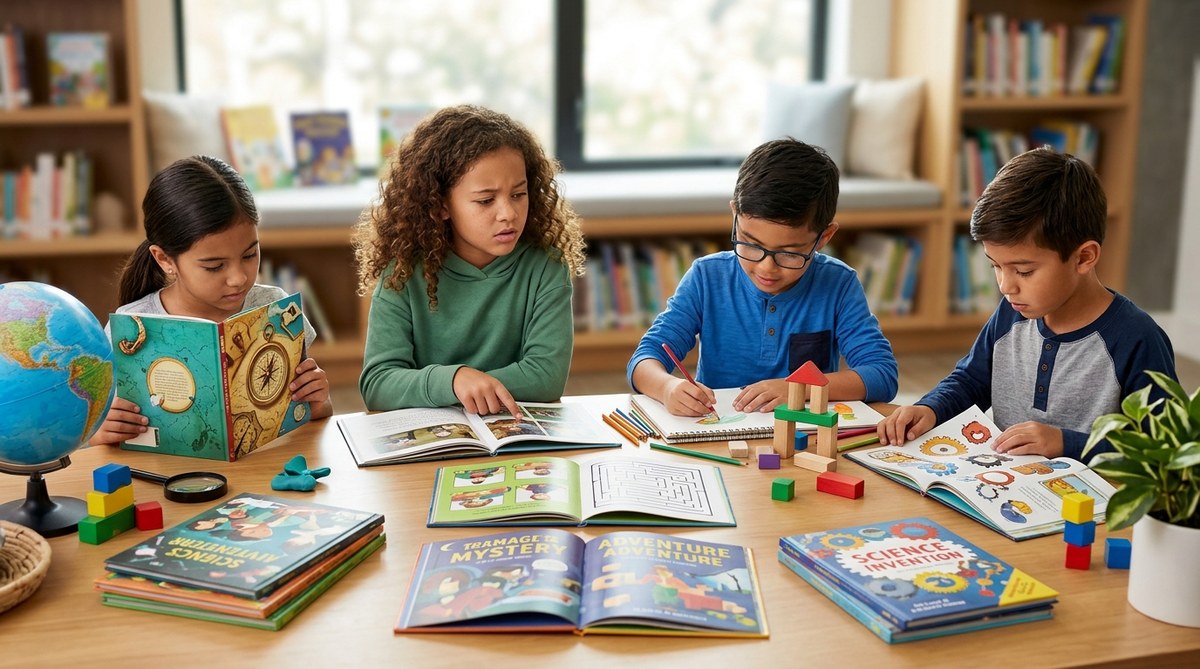
Creating a space that encourages questioning and creativity involves more than just books. Include art supplies, open-ended toys, and opportunities for discussion. Ask children what they think about the story and what they might do differently.
Additionally, consider involving children in choosing books. When they have a say, they become more invested and eager to think creatively about the stories.
Final thoughts on nurturing young critical thinkers and creators
Choosing children’s books that promote critical thinking and creativity can significantly influence their development. These stories serve as springboards for imagination, problem-solving, and questioning. By selecting engaging, open-ended books and encouraging active discussion, you help cultivate curious, confident learners ready to explore the world with an inventive eye.
Remember, the key is to engage with your child’s interests and foster a reading environment that values questions and ideas. With the right stories and guidance, your child’s natural curiosity can flourish into a lifelong love of learning.
How to keep the creative and critical thinking momentum going
Continuously introduce new books that challenge and inspire. Mix fiction with activity-based stories and hands-on projects. Keep conversations lively and encourage children to share their ideas freely. Over time, these habits build a strong foundation for critical thinking and unbounded creativity that benefits all areas of life.
By making reading an interactive and reflective experience, you empower children to become thoughtful, inventive, and confident individuals who see the world as a place full of possibilities.