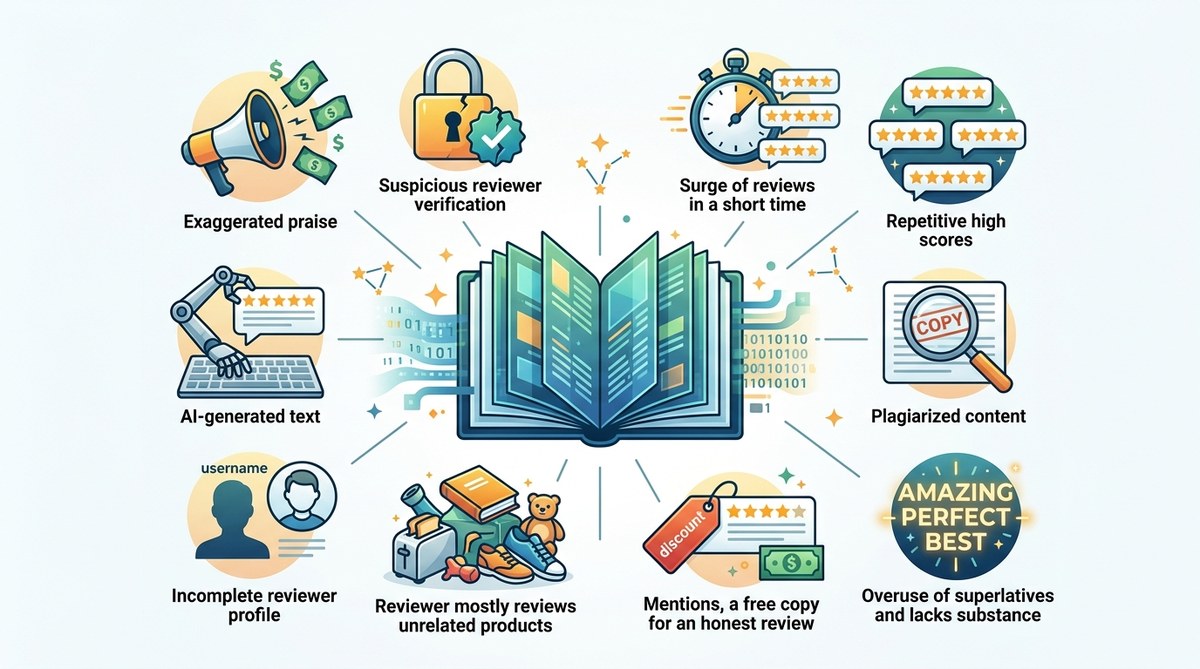
10 Book Review Red Flags That Signal a Paid or Fake Recommendation
You just published your book. You feel proud. Then you start hunting for reviews. That is where things get tricky. A lot of services promise the moon. They guarantee glowing feedback. They ask for money upfront. Some of them are scams.
Paid or fake book reviews hurt your reputation. They mislead readers. They can even get your book banned from major sites like Amazon. Learning to spot the warning signs saves you time, money, and your author brand.
This guide shows you exactly what to look for. Use these red flags to protect yourself. You will learn how to find honest, helpful feedback that real readers trust.
Fake book review services often promise fast results, ask for payment before delivery, and use vague language. Legitimate reviewers read your book, write specific feedback, and post on verified accounts. If a service cannot name a single real reviewer or promises a guaranteed star rating, walk away. Protect your author reputation by learning these ten red flags.
The Sneaky World of Paid Book Reviews
Not every review you see online comes from a real reader. Some authors pay for glowing praise. Others get tricked into buying packages that deliver nothing but empty words. The Federal Trade Commission has gone after companies for fake reviews. Amazon deletes thousands of suspicious ratings every month. Yet the problem keeps growing.
As a self-publishing author, you have limited time and money. You cannot afford to waste either on a scam. The good news is that fake reviews leave a trail. You just need to know what to look for.
Ten Red Flags That Scream “Fake”
Here is a checklist of warning signs. If you see any of these, run the other way.
-
They ask for money before writing anything. A legitimate reviewer reads your book first. They decide if they like it. Then they post their honest opinion. A paid service that demands cash upfront is selling a product, not a review.
-
They guarantee a five-star rating. No honest reviewer can promise a perfect score. They have not read your book yet. Even if they did, taste is subjective. A guarantee of five stars means the review is fake.
-
They refuse to name their reviewers. Real reviewers have names, bios, and sometimes a history of reviews. If the service cannot tell you who will read your book, they are hiding something.
-
They use generic, copy-paste language. Look at their sample reviews. Do they all sound the same? Phrases like “a must-read” or “I could not put it down” with no specific details are a bad sign.
-
They promise a huge number of reviews in a short time. Getting 50 genuine reviews in one week is nearly impossible. Real readers need time. Even professional reviewers take days or weeks to finish a book and write their thoughts.
-
They have no online presence. Check their website. Do they have a real address? A phone number? A social media account with actual followers? If they look like a ghost, they probably are.
-
They use high-pressure sales tactics. “This offer expires today!” “Only five spots left!” Real review services do not act like used car salesmen. They let you decide at your own pace.
-
They do not ask about your book. A legitimate reviewer wants to know the genre, the audience, and the themes. If they skip these questions, they do not plan to read your book at all.
-
They offer to post reviews on multiple platforms for one fee. Amazon, Goodreads, Barnes & Noble, and other sites have different rules. Posting fake reviews across many sites is against their terms of service. A service that offers this is breaking the rules.
-
They have bad reviews themselves. Check for complaints about the service. Search their name plus “scam” or “fake.” If other authors got burned, you will too.
How to Scan a Review Service
Before you hand over any money, run through this checklist. Use it every time.
- Does the service have a real physical address?
- Can you find the reviewers on Goodreads or Amazon?
- Do the sample reviews mention specific characters or plot points?
- Is the price suspiciously low or high?
- Do they accept returns or refunds?
- Do they have a clear privacy policy?
- Are they listed on the Better Business Bureau?
- Do they have testimonials from real authors you can contact?
- Do they explain their review process in detail?
- Do they guarantee a verified purchase badge?
If you answer “no” to more than two of these, walk away.
Spotting Fake Reviews: A Handy Table
Use this table to compare legitimate services with shady ones.
| Feature | Legitimate Reviewer | Fake Service |
|---|---|---|
| Payment timing | After review is posted | Before any work is done |
| Star guarantee | None | Yes, usually 4 or 5 stars |
| Reviewer identity | Named, with profile | Anonymous or vague |
| Review content | Specific, personal details | Generic, copy-paste phrases |
| Timeline | Realistic (weeks) | Unrealistic (days) |
| Platform policy | Follows site rules | Offers to post everywhere |
| Refund policy | Clear and fair | None or confusing |
Expert Advice from a Self-Publishing Veteran
“I wasted $300 on a review service that promised 20 reviews. I got three generic blurbs that sounded like they were written by a robot. One of them even had a typo in my book title. Now I only work with reviewers who have a real presence on Goodreads and who agree to read my book before discussing payment. It takes longer, but the results are worth it.”
- Sarah K., self-published author of five novels
A Step-by-Step Process for Finding Real Reviews
Follow these steps to find honest reviews without getting scammed.
Step 1: Build your reviewer list. Start with friends, family, and beta readers. Ask them to post honest reviews on Amazon and Goodreads. Make sure they mention they received a free copy.
Step 2: Use legitimate review services. Sites like NetGalley and BookSirens connect authors with real readers. These services charge a fee for access, but they do not guarantee positive reviews.
Step 3: Join author communities. Facebook groups, Reddit forums, and writing circles often have review swap threads. Trade honest reviews with other authors in your genre.
Step 4: Reach out to book bloggers. Many bloggers accept review copies. They post their reviews on their blog, Goodreads, and Amazon. Look for bloggers who cover your genre.
Step 5: Use Amazon’s Verified Purchase system. Encourage readers who buy your book to leave a review. Verified Purchase reviews carry more weight with Amazon’s algorithm.
Step 6: Monitor your reviews. Check for suspicious activity. If you see a five-star review from a brand new account with no other reviews, it might be fake. Report it to Amazon.
Why Fake Reviews Hurt You More Than They Help
Some authors think a few fake reviews will give them a boost. The opposite is true. Amazon and other retailers can detect patterns of fake reviews. They may remove all reviews for your book. They may even suspend your account.
Your reputation with readers matters more than a few quick stars. Real readers can spot generic praise. They will wonder if your book is any good if the only reviews sound like ads.
Worst of all, fake reviews steal your money. You could spend that cash on editing, cover design, or real marketing. Instead, you get nothing but empty promises.
Your Next Move: Protect Your Author Reputation
You have the tools now. You know the book review red flags scam services use. You know how to spot them. The next step is action.
Review your current list of potential review services. Run them through the checklist above. If any raise a red flag, cross them off.
Then start building your real review strategy. Reach out to one blogger this week. Join one author community. Ask one beta reader to post their honest thoughts.
Take it one step at a time. You do not need a hundred reviews overnight. You need a few honest ones that real readers can trust.
Your book deserves better than a fake review. Your readers deserve better too. Start building your reputation the right way, and watch your author career grow.