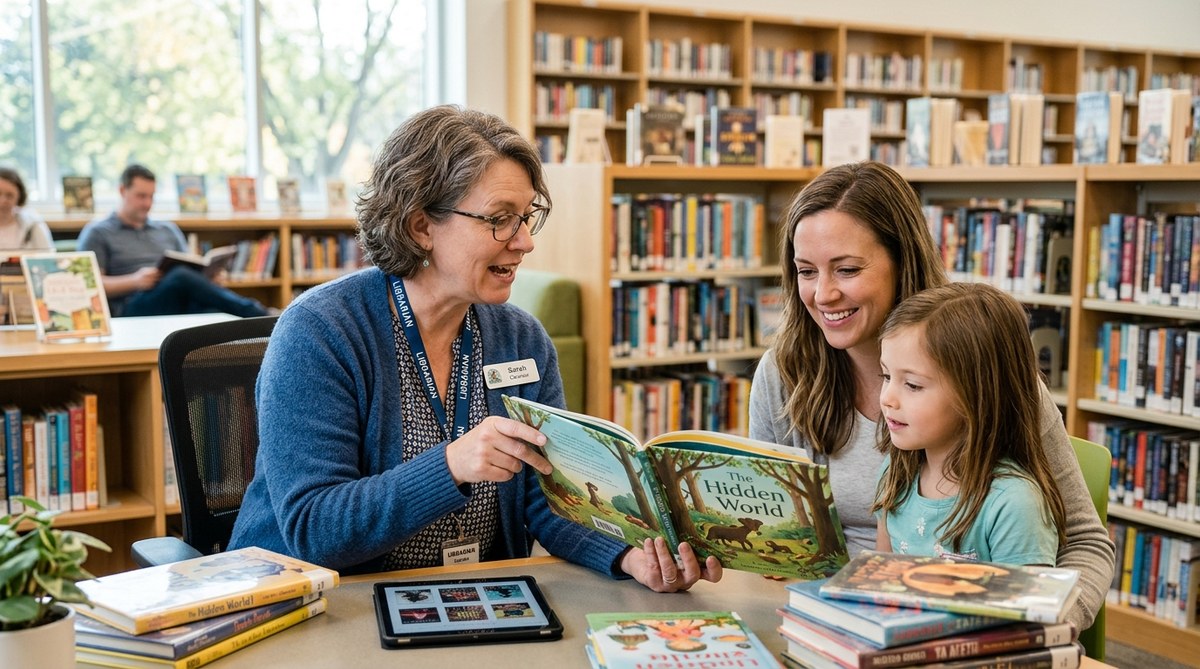
Why Book Reviews from Librarians Are the Most Underrated Tool for Parents
As a parent, you want the perfect book for your child. You want something that sparks their imagination, builds their empathy, and keeps them turning pages past bedtime. But standing in the library or scrolling through an online bookstore can feel overwhelming. There are thousands of titles, dozens of genres, and endless opinions. Algorithms guess what your child might like based on what they bought last time. Commercial bestseller lists push the same blockbuster names. And everyone on social media seems to have an opinion.
This is where librarian book reviews come in. They are not just helpful. They are the most underrated tool in your parenting arsenal. Librarians read widely, they read critically, and they have no stake in whether you buy the book. They are not paid by publishers, and they do not care about trends. Their only job is to connect the right reader with the right story. And when you learn how to use their reviews, you stop guessing and start choosing with confidence.
Librarian book reviews offer unbiased, expert guidance that algorithms and commercial bestseller lists cannot match. They focus on reading level, emotional maturity, and literary quality. This guide shows you how to find them, trust them, and use them to build a lifelong love of reading in your child.
Why Librarian Reviews Beat Every Other Source
Librarians train for years to understand children’s literature. They study what makes a book developmentally appropriate. They know the difference between a picture book for a three-year-old and one for a six-year-old. They understand reading levels, but they also understand emotional readiness. A book might be technically easy to read but deal with themes your child is not ready for. A librarian review will tell you that.
Commercial reviews, like those from big retail sites, often focus on popularity. They tell you what is selling, not what is good. Influencer reviews can be biased because the influencer received a free copy or a sponsorship. Even well-meaning parent groups can be swayed by a beloved series or a nostalgic childhood favorite. Librarian reviews strip all of that away. They ask one simple question: does this book work for the reader it is meant for?
What Makes a Librarian Book Review Different
When you read a review from a librarian, you are getting a professional evaluation. They do not just say “my kids loved it.” They explain the structure of the story. They note the pacing. They mention the quality of the illustrations and how the text works with them. They flag potential concerns, like stereotyping or heavy-handed moralizing, without spoiling the plot.
Here is what a typical librarian review includes:
- Reading level clarity: They specify if it is a read-aloud, an early reader, or a chapter book.
- Developmental fit: They note the emotional age range, not just the grade level.
- Literary merit: They comment on the writing quality, character development, and plot structure.
- Unbiased warnings: They mention if a book contains scary scenes or complex topics, so you can decide.
- Comparable titles: They often say “if your child liked X, they will love Y.”
This level of detail is rare in user-generated reviews. It gives you the information you need to make a smart choice before you bring a book home.
How to Find Librarian Reviews You Can Trust
You do not need a library card to access these reviews, although it helps. Most public libraries have databases like NoveList or Booklist Online that you can access with your library credentials. These resources are goldmines. They offer professional reviews from publications like School Library Journal and The Horn Book Magazine, which are the gold standard in children’s literature.
You can also find librarian reviews on library blogs and podcasts. Many youth services librarians run thoughtful review sites or contribute to collective blogs. Look for reviews that are signed by a librarian, not a generic “staff pick.” A signed review holds the writer accountable. It shows they are putting their professional reputation behind their opinion.
If you are browsing a bookstore, check the back of the book or the copyright page. Professional reviews are often reprinted there. If you see a blurb from Kirkus or Booklist, you know the book has been vetted by an expert. If you are shopping online, filter your search to show professional reviews only. This simple step removes the noise and gives you the signal you need.
The Hidden Bias in Popular Book Reviews
Let us talk about why you should be cautious with reviews from popular authors. When an author writes a blurb for another author, they are often friends. They share an agent or an editor. They might be writing for the same publishing house. This does not mean their praise is false, but it is not objective. It is a professional courtesy.
Similarly, reviews from “Bookstagrammers” or “BookTokers” can be influenced by free advanced copies or exclusive content. A creator who receives a box of goodies with a book might post a glowing review, not because the book is great, but because they want to maintain a good relationship with the publisher. This is human nature, but it does not help you find a good book for your child.
Librarian reviews have no such conflict of interest. A librarian does not get a bonus for recommending a specific title. They do not get free merchandise for a positive review. They are free to say “this book is a mess” or “the sequel falls flat.” This honesty is precious.
A Practical Process for Choosing Your Child’s Next Read
You can use librarian reviews as your first filter, then combine them with your own knowledge of your child. Here is a step-by-step process that works:
- Start with a list: Use a librarian-curated book list like top reading lists to inspire a lifelong love of books for all ages to get a few solid starting points.
- Read the review, not just the rating: Look for the specific details about the plot and the characters. Does the main character remind you of your child? Does the conflict feel relevant to their life?
- Check the reading level: Make sure it is not too hard or too easy. Frustration kills reading joy. So does boredom.
- Look for the “read-aloud” factor: If you plan to read it together, look for a review that mentions rhythm, dialogue, and pacing.
- Cross-reference with your child’s interests: If your child loves dinosaurs, find a book that combines a librarian’s stamp of approval with a dinosaur theme. A great review cannot overcome a topic your child finds boring.
Using Book Reviews to Spark Conversations
Book reviews are not just for picking books. They are also great conversation starters. When you read a review together with your child, you teach them critical thinking. You show them that not every opinion is equal. You explain that some reviews are based on personal taste, while others are based on quality.
For example, you can read a review that says “the ending felt rushed” and ask your child, “Do you think that would bother you?” This helps your child understand their own preferences. It also builds a vocabulary for talking about stories. They start to notice pacing, character motivation, and plot holes. These are skills that will serve them well in school and in life.
Why You Should Read the Negative Reviews First
This sounds counterintuitive, but it works. The negative reviews often contain the most useful information. A one-star review that says “this book is too scary for my sensitive seven-year-old” tells you exactly what you need to know. If you have a child who loves scary stories, that review just gave you a green light. If you have a sensitive child, it just saved you from a nightmare-filled week.
Professional librarian reviews often include a “concerns” or “caution” section. Pay attention to that. It is not a reason to avoid a book. It is a tool to help you decide if it is right for your child. A book about a pet dying might be perfect for a child who is processing grief. A book with mild language might be fine for a middle schooler, even if it is not right for a first grader.
The Secret to Finding Hidden Gems
The best books are not always the ones on display at the front of the store. They are the ones tucked away on the shelf, waiting for the right reader. Librarian reviews are the best way to find these hidden gems. Librarians are famous for finding books that did not get a big marketing push but are brilliant nonetheless.
When you rely on librarian recommendations, you are tapping into a deep well of knowledge about the entire history of children’s literature. They can recommend a book from ten years ago that is still relevant today. They can point you to an author you have never heard of who writes exactly the kind of story your child loves. This is how you move beyond the bestseller list and find books that feel like they were written just for your family.
A Quick Checklist for Spotting Quality Reviews
Not all reviews are created equal. Use this checklist to separate the helpful from the hype:
- Author credentials: Is the reviewer a librarian, a teacher, or a professional reviewer? Or is it just a random person with an internet connection?
- Specificity: Does the review mention specific plot points, characters, or themes? Or is it full of vague praise like “amazing” and “wonderful”?
- Balance: Does the review mention any weaknesses? A balanced review is more trustworthy than one that gushes nonstop.
- Audience awareness: Does the review talk about who the book is for? A good review will say “reluctant readers will enjoy this” or “great for fans of fantasy.”
- Date: Is the review recent? A book review from 2005 might not be relevant to today’s readers, especially for non-fiction or science topics.
How to Use This for Every Age Group
The principles are the same, whether you have a toddler or a teenager. For picture books, look for reviews that discuss the art and the read-aloud quality. For early chapter books, look for reviews that mention vocabulary and sentence structure. For middle grade, look for reviews that discuss the emotional depth and complexity. For young adults, look for reviews that are honest about mature themes.
You can also use librarian reviews to guide your own reading. The same skills apply when you are choosing a book for yourself. In fact, the best book reviews for adult fiction enthusiasts follow the exact same principles. They focus on craft, character, and the reading experience.
The Role of Awards and Review Publications
Awards are another shortcut to quality. The Newbery Medal, the Caldecott Medal, and the Coretta Scott King Award are all chosen by librarians. When you see that a book has won an award, you know it has been vetted by a committee of experts. You can find lists of award-winning books for every age group to get you started.
But do not feel limited to award winners. Many fantastic books are recognized with “best of” lists from library journals. These lists are curated by librarians and are a great source of recommendations. They often include a wider range of titles than the major awards, including genre fiction and nonfiction.
Building a Reading Culture at Home
The ultimate goal is not just to find the next book. It is to build a reading culture at home. When your child sees you consulting reviews, weighing options, and getting excited about a good story, they learn that reading is valuable. They learn that choosing a book is a skill. They learn that their own taste matters.
Make a trip to the library an adventure. Let your child pick out books that look interesting, but also have a few librarian-approved options ready. You can say, “I found this great review of a book about a kid who builds a rocket. Want to try it together?” This gives your child agency while still ensuring a quality experience.
Teaching Your Child to Read Reviews
As your child gets older, you can teach them how to read reviews themselves. Show them how to identify the main argument of a review. Ask them if they agree with the reviewer’s assessment. This is a valuable media literacy skill that extends far beyond books. It teaches them to evaluate sources, consider different perspectives, and form their own opinions.
You can start by reading reviews aloud and discussing them. Then, let them find their own reviews for books they want to read. You might be surprised by what they pick up. They might be drawn to a book because a review mentions a character who is “brave” or “funny.” This is a great sign. It means they are thinking about what they want from a story.
Your Next Steps as a Parent
You do not need to read every review or become an expert in children’s literature. You just need to know where to look and what to trust. Start by checking out a few librarian review sites. Bookmark one or two that you like. The next time you are looking for a book, check there first.
When you find a review you trust, look for more reviews by the same person. You are building a relationship with a reader whose taste aligns with yours. This is more valuable than any algorithm. A good reviewer is like a friend who knows exactly what your child will love.
Making the Final Choice
Sometimes you will pick a book that does not work out. That is okay. It happens to every parent. The goal is not perfection. The goal is to keep trying, to keep reading, and to keep exploring. Each book, whether a hit or a miss, teaches you something about your child’s preferences.
If you bring home a book and your child does not like it, do not force it. Put it aside and try another one. The library is full of books. There is no shame in abandoning a book that is not working. In fact, learning to abandon a book is an important skill. It teaches your child that they have control over their reading life.
A Final Word on Finding the Perfect Book
The search for the perfect book is really a search for connection. It is about finding a story that speaks to your child, that makes them feel seen and understood. Librarian reviews are a powerful tool to help you find that connection. They cut through the noise and point you toward quality.
So the next time you feel overwhelmed by the sheer number of books out there, remember this guide. Look for the librarian’s stamp of approval. Read the reviews that mention specific details. Trust your own knowledge of your child. And when you find a book that works, celebrate it. You have just given your child the gift of a good story. And that is a gift that will keep giving for a lifetime. For more curated suggestions, you can always check our guide to choosing the perfect book for every age and interest or explore our collection of children’s book reviews. Happy reading.